Know Not What We May Be
70 photographs · Hong Kong, the Philippines, Turkey, Bulgaria, Romania, Germany, Belgium, the United States, Japan, Cuba, Spain · 2011–2017
I had a good job and I was good at it. Every year I got better at it, and every year the other thing got quieter, and I could feel which way that was going.
So I saved and I went. Hong Kong, Manila and Cebu in November 2011. Manila and Cebu again the following spring. Istanbul, Bulgaria, Romania, Bavaria and Belgium in March 2014. Detroit through that winter, Tokyo in April, Berlin in May. Havana in 2017. I told people I was going to see the world. I was going to look at people who had already made the choice I could not make, to find out what it cost them.
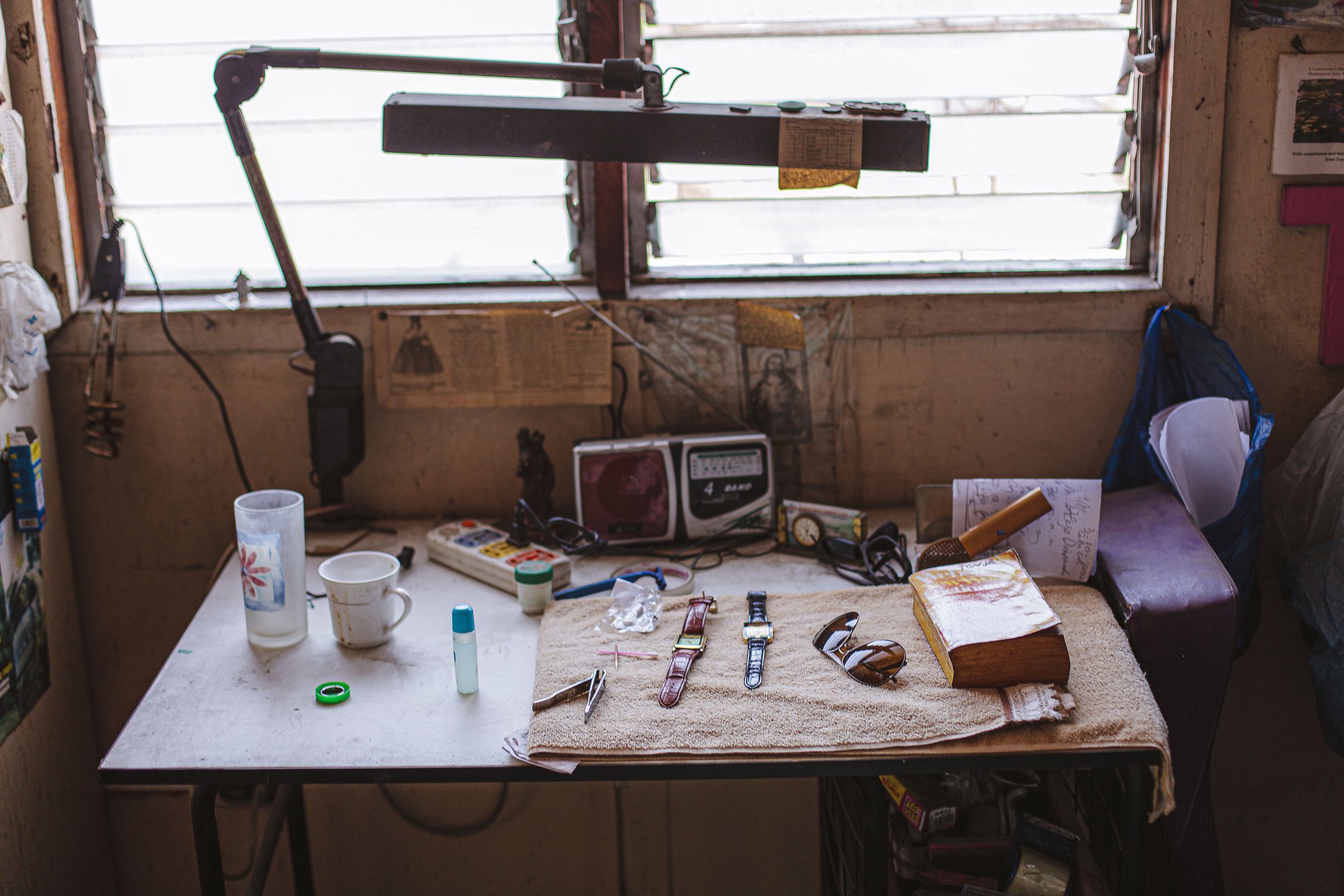
The book starts in my mother's ancestral home in Cebu, at my uncle's table. Two watches, his sunglasses, a nail clipper and a Webster's dictionary, laid out in a row on a folded towel. A lamp arched over them, a transistor radio behind, the window bleached white. He is not in the frame. Everything a man keeps within reach, and no man.
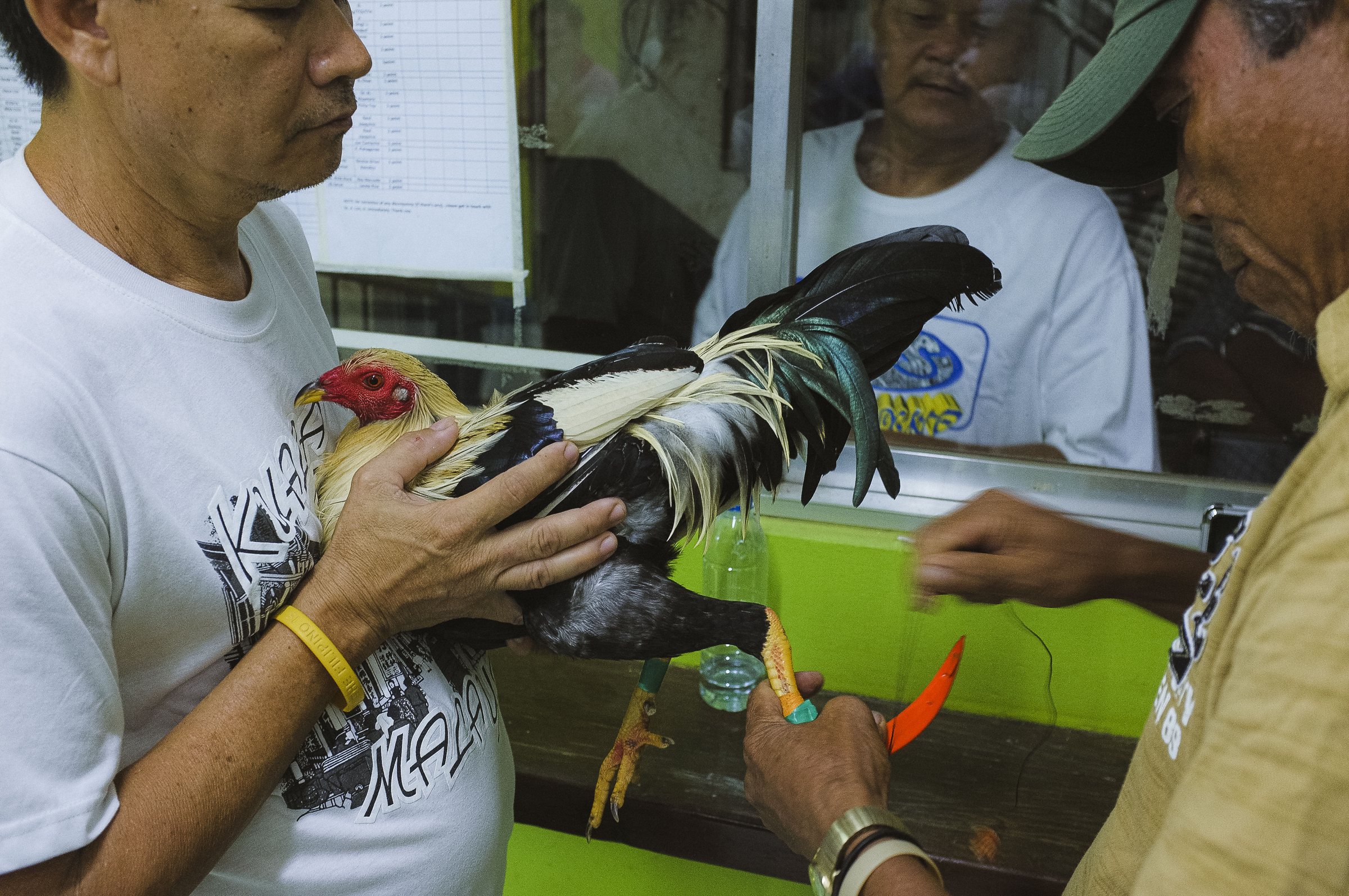
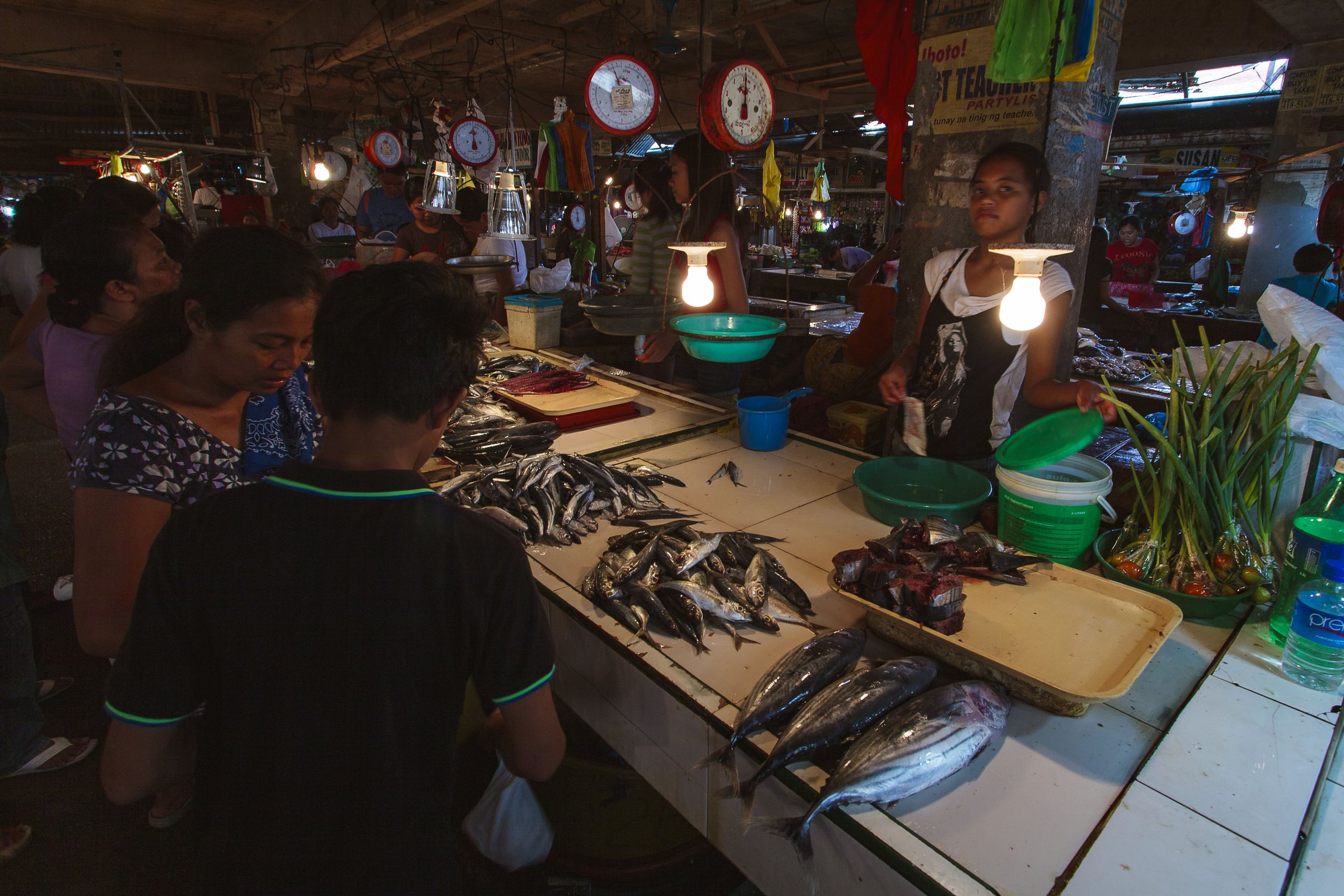
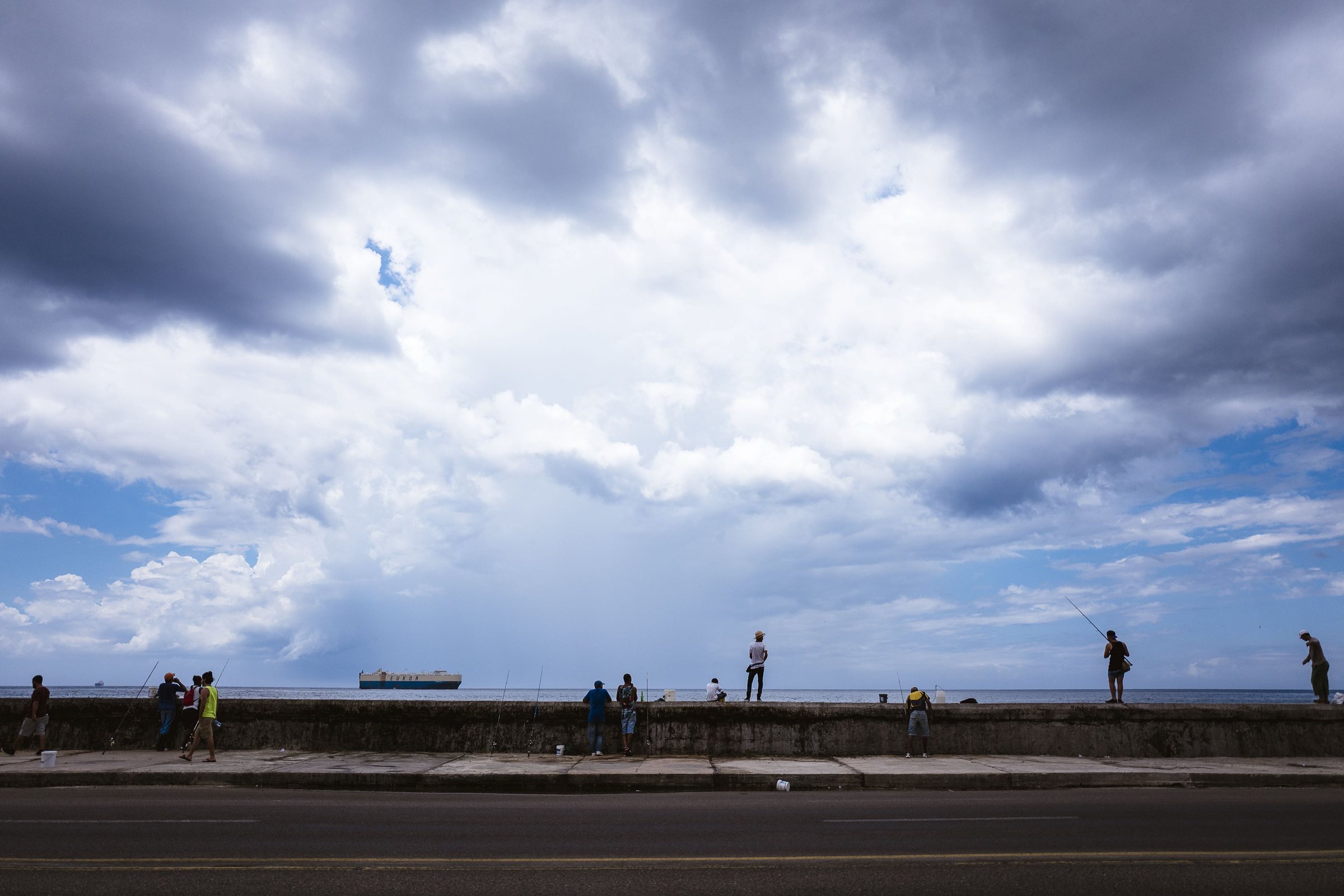
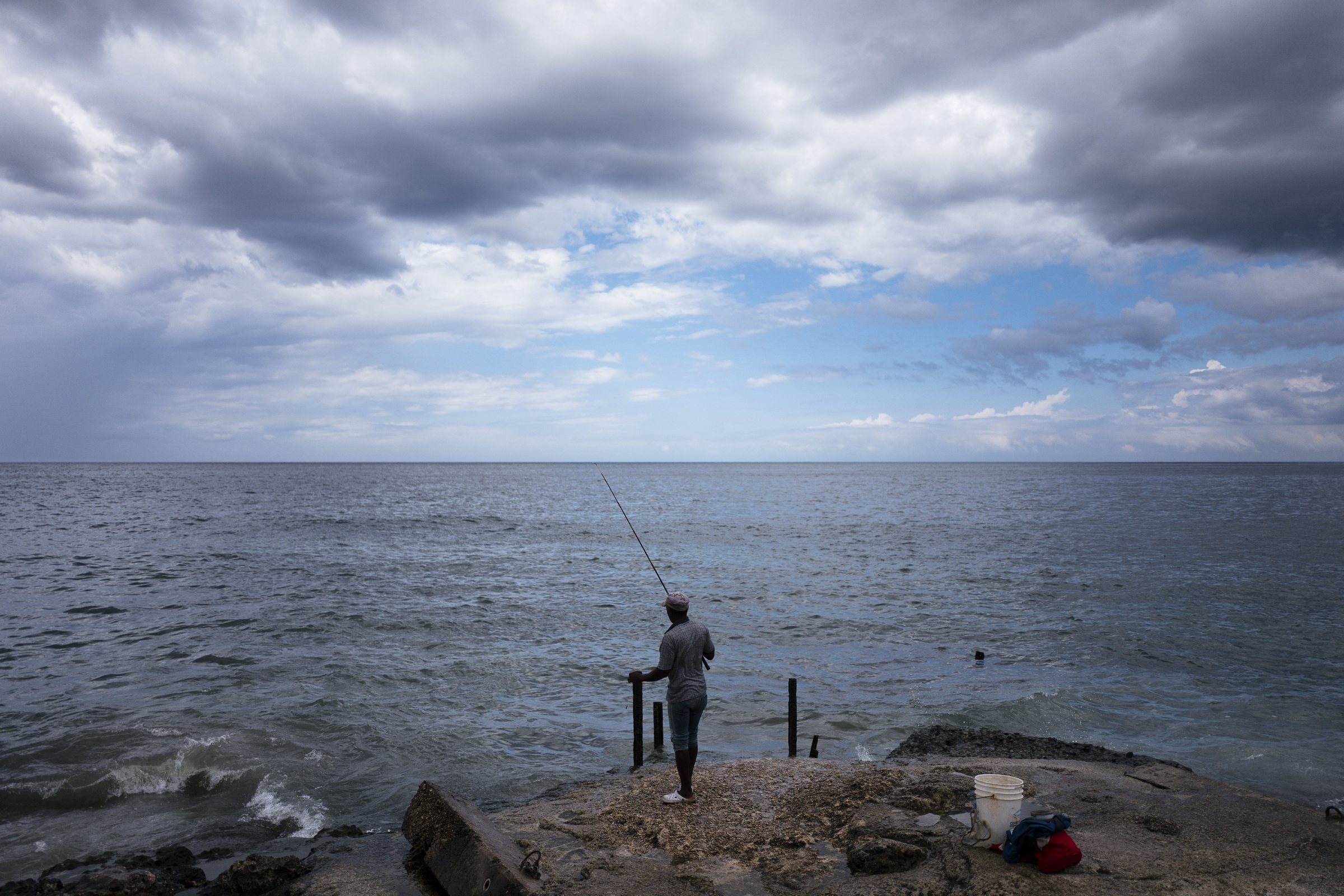
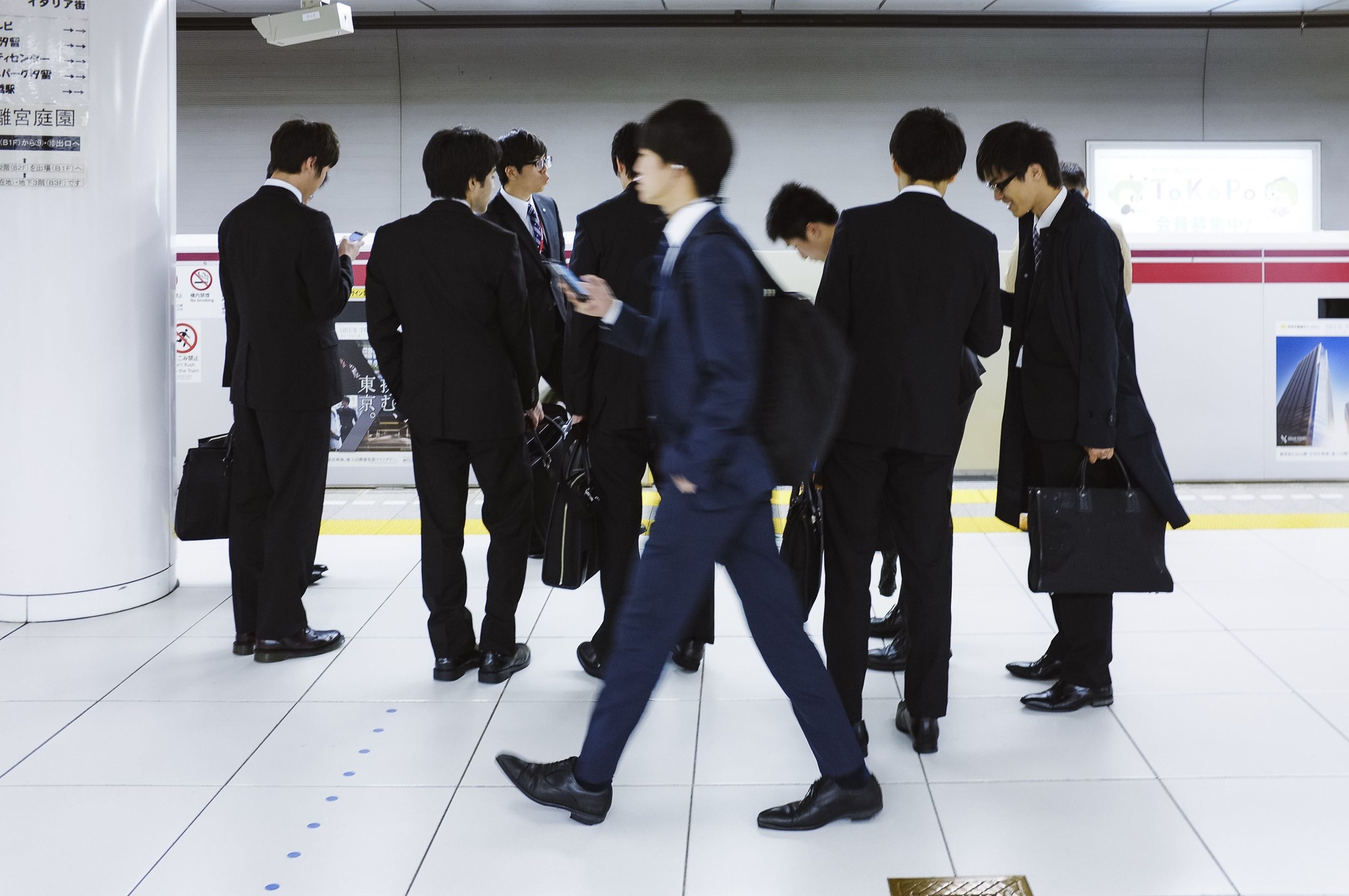
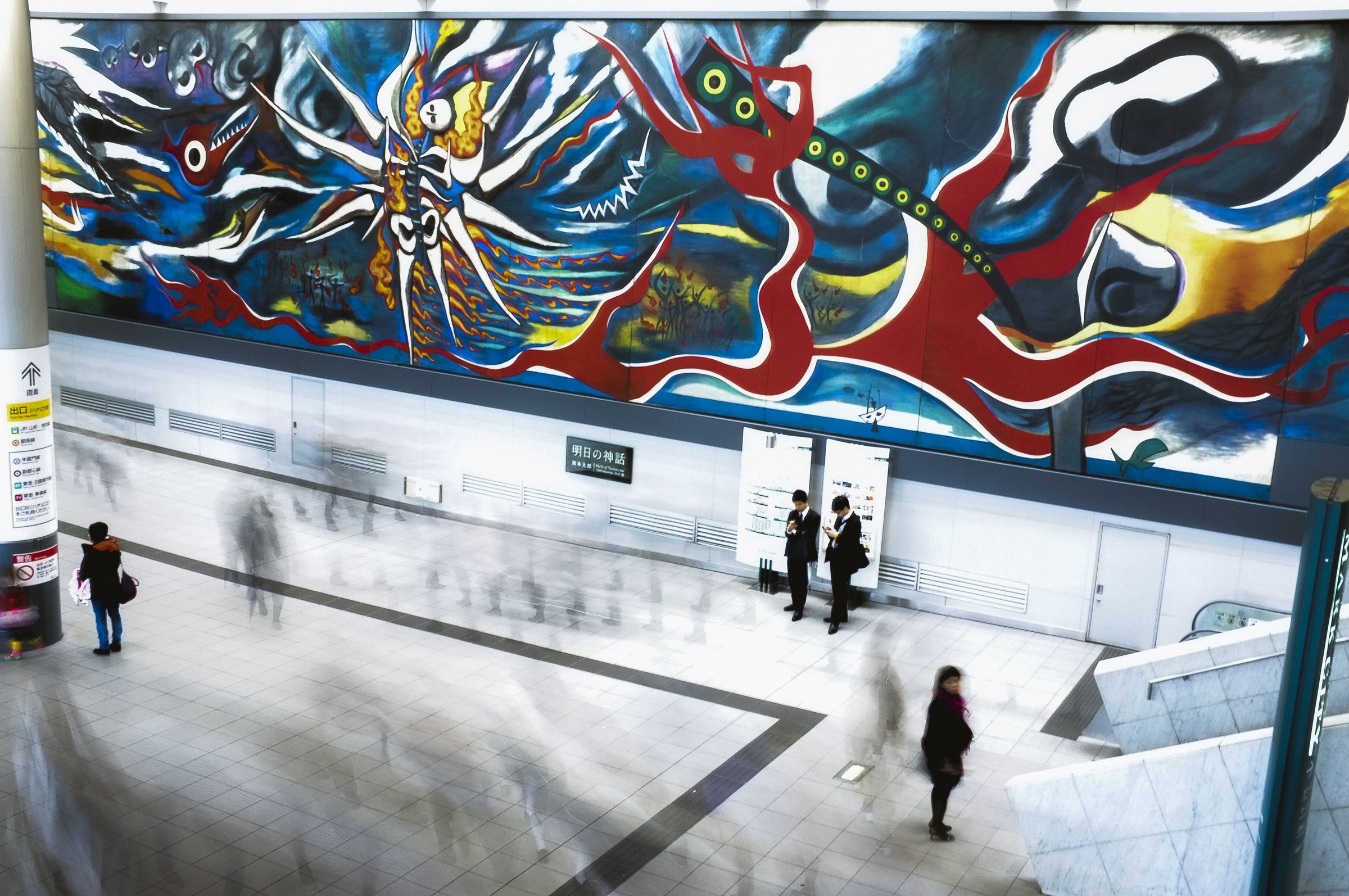
Then I went out and found other people working. A woman in a teal polo, gloved, weighing roast pork on a hanging scale through the glass of the counter she sells over. Nine young men on a Tokyo platform in identical black recruit suits, every one holding a black briefcase, and one man in navy walking straight through the middle of them. A woman lifting a green basin in the Carbon Market in Cebu at night. A man holding a rooster against his chest and looking down at it with real tenderness while another man's hands fit the blade to its leg. Nine fishermen along the Malecón and, a few frames later, one man alone on a jetty.
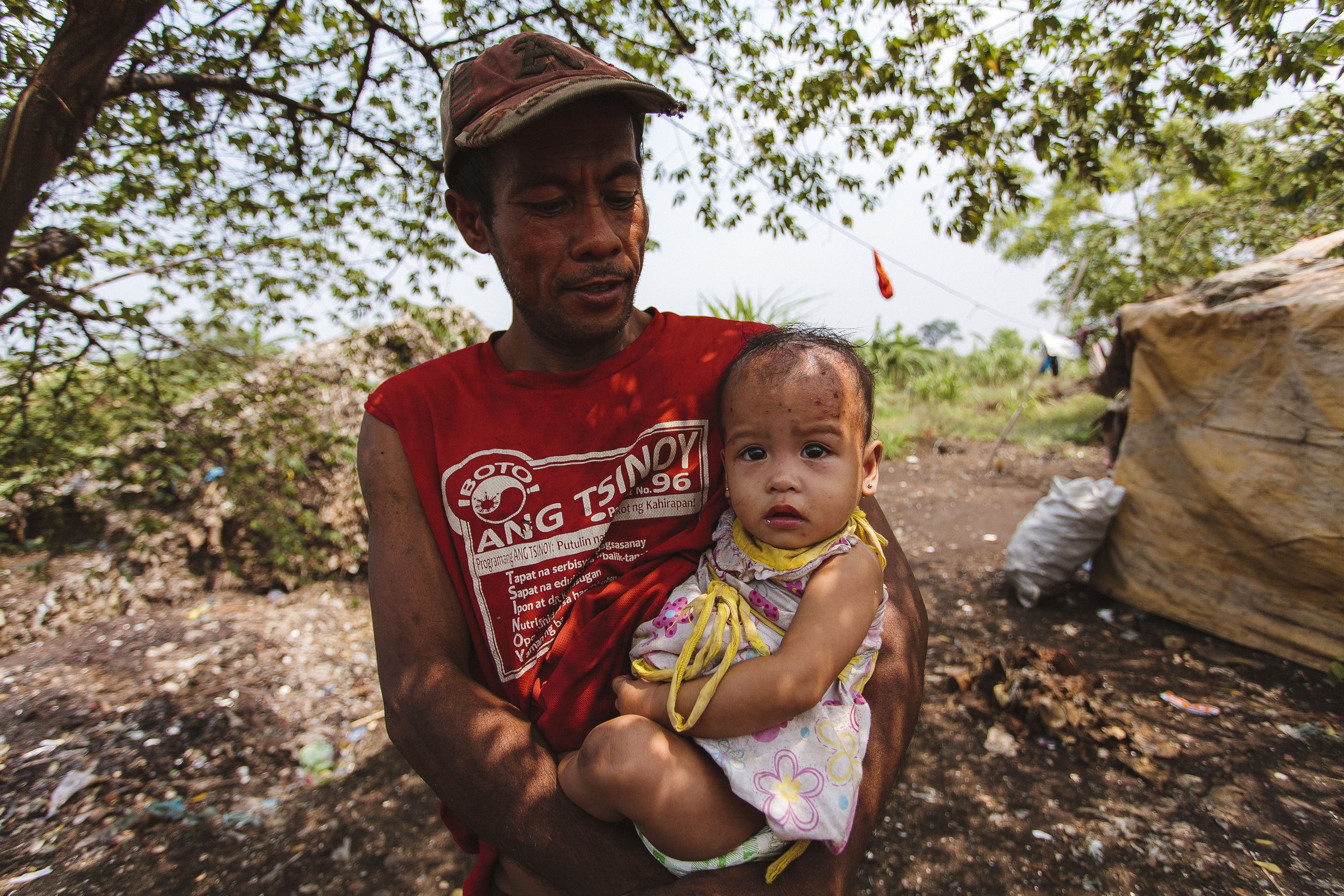
Then I started noticing what I was stopping for. A young man resting on the bamboo scaffolding he is building, out over the water, head down on his hand. Shoes hung sole-out to dry on a pale green gate. A father at the edge of a landfill holding his infant daughter, looking down at her while she looks straight into my lens.
I was photographing the pauses. The moment the work lets go is the only part of a working life that belongs to the person living it, and I flew seven thousand miles to photograph other people having theirs.
I never got the answer I went for. I had gone looking for people who had made my choice, and what I found were people who had never been offered it. I came home from every one of these trips and went back to the desk. Six years of that, and the argument I was having with myself is the whole reason these pictures exist.
The title is Ophelia's. We know what we are, but know not what we may be. She says it while handing out flowers and coming apart. I took it for a book about work because it is the sentence for the thing I wanted and the thing I was afraid of, which were never two different things.